
The Courage to be Real
How Authenticity Opens Us to Sacred Connection
Have you ever had a conversation where you suddenly felt more yourself? Where you weren’t performing, explaining, adjusting, or negotiating—but simply being—and something in the space between you and the other person came alive?
In moments like these, something sacred stirs. Not in some grand spiritual breakthrough, but in the quiet recognition of what’s real. It escapes definition, but we feel it. A softening. A resonance. A shared recognition of unusual intimacy—with each other and with ourselves. The space between becomes one of connection, not separation—a vibrant presence in which our social masks and usual defences fall away, and a sense of unity arises that includes and embraces us both.
In a world flooded with spiritual content—polished teachings, curated “awakened” personas, fast-track programs promising inner peace—many of us are rediscovering something far more grounded: that the real path is not about striving for perfection, full of expectations and fixed ideas, but simply relaxing into our honest, human experience, just as it is right now. That authenticity is not a destination—it’s a doorway. And walking through it, we find we’re not alone.
The Comparison Trap and the Loss of Self
From early childhood, we’re taught to compare ourselves to others—to measure, to strive, to fit in. Uniqueness often becomes something to downplay or exaggerate in the hope of being accepted. But both strategies keep us distanced from our natural self.
We internalize subtle beliefs: that we should be more spiritual, more enlightened, more serene. That there’s a “right” way to be on a path. We begin to chase the version of ourselves we think will earn love, approval, or inner peace—and, most importantly, recognition. But the deeper self—the one that lives beneath all that effort—waits patiently for us to come home.
Something changes when we stop comparing and start listening to the actual rhythm of our lives. When we drop beneath ideas of who we should be and land in who we already are. The body relaxes. The heart softens. And the stories we’ve been spinning start to lose their grip.
Presence Is Shared, Not Achieved
When we encounter someone truly at home in themselves—not performing, not hiding—we feel it. And something in us responds. We begin to trust that we, too, can show up without pretence. That we are enough, just as we are. This kind of authenticity is quietly contagious.
I’ve been part of a small group for the past few years—a simple gathering of people curious about living more fully from presence. We began with no structure or intention beyond friendship. But something emerged in the spaces between our words. A subtle coherence. A field of trust.
It took careful nurturing and the guidance of some of us more at home in the field for things to stabilise over time. We weren’t trying to be spiritual—we were just being ourselves. And somehow, that made space for something larger to appear. There was a freshness, a vibrancy, a joy in companionship—all mediated by an unusual and immediate intimacy that went beyond any ideas we might have been holding of each other.
As the group grew, the connection didn’t thin—it deepened. Not because we followed a method, but because we each brought our own thread with honesty and care. Over time, we realized: the way we are together is the practice. The space of shared presence doesn’t arise from technique. It arises from integrity.
Integrity as Inner Medicine
This kind of integrity—the willingness to be real even when it feels risky—is what I call radical personal autonomy. It’s not the rugged individualism often promoted in our culture, but something subtler: the courage to stay true to your inner compass, even when the tide around you flows in another direction.
In group settings, there’s often unspoken pressure to keep things safe or familiar. Sometimes we sense when something’s gone flat, when presence has slipped into performance—but we hesitate to name it. That’s where the real work begins: the vulnerable act of speaking from truth, even if it disrupts the flow.
Real presence requires permeability. It asks us to stay rooted in ourselves while remaining open to what’s unfolding around us. It requires deep listening—to the other, and to our own inner voice that recognizes sincerity and honesty. And then, the integrity to respond from a place of not being sure, to be willing to be wrong in the uncovering of a shared truth.
This is more than a relational skill—it’s a spiritual practice. It’s the quiet medicine that allows connection to arise organically. And it’s often the missing piece in conversations about spiritual wellness, where maintaining a position can sometimes matter more than uncovering a deeper wisdom.
The Healing Power of Mutual Realness
This field of shared presence isn’t reserved for spiritual groups. It’s available in everyday life—in conversations with friends, in moments of silence with loved ones, even in a glance exchanged with a stranger. It’s not a product of special conditions. It’s a function of availability.
When we are grounded in our realness—truly at home in ourselves beyond holding fixed ideas—we become accessible to others, not just emotionally but energetically. The spaces between us become less guarded, less effortful. Connection stops being something to engineer and becomes something to receive.
What we’re longing for, beneath all the seeking, may not be a new insight or experience. It may simply be this: to be ourselves, and to be met there. That, in itself, is sacred.
And maybe this points to a deeper awakening than simply the personal. Maybe each opportunity for real connection creates a living space for a relational awakening, in which everyone benefits—a ripple that spreads out into all our relationships.
A Gentle Practice
Take a moment to remember a time when you felt most at ease in yourself. Where were you? What were you doing? Who were you with? What was it about that moment that made you feel so real?
Now consider: how might you bring a little more of that feeling into your life today? Into a conversation? A decision? A pause in your routine? Allowing space for something new to arise—something you are not in control of?
These small acts of realness are not detours from the spiritual path. They are the path. They return us to the immediacy of life—not the life we think we should have, but the life we’re already living.
Because what if healing isn’t about self-improvement, but about coming home?
What if wellness isn’t something we achieve, but something we allow?
What if your wholeness is already here, quietly waiting in the truth of who you are?
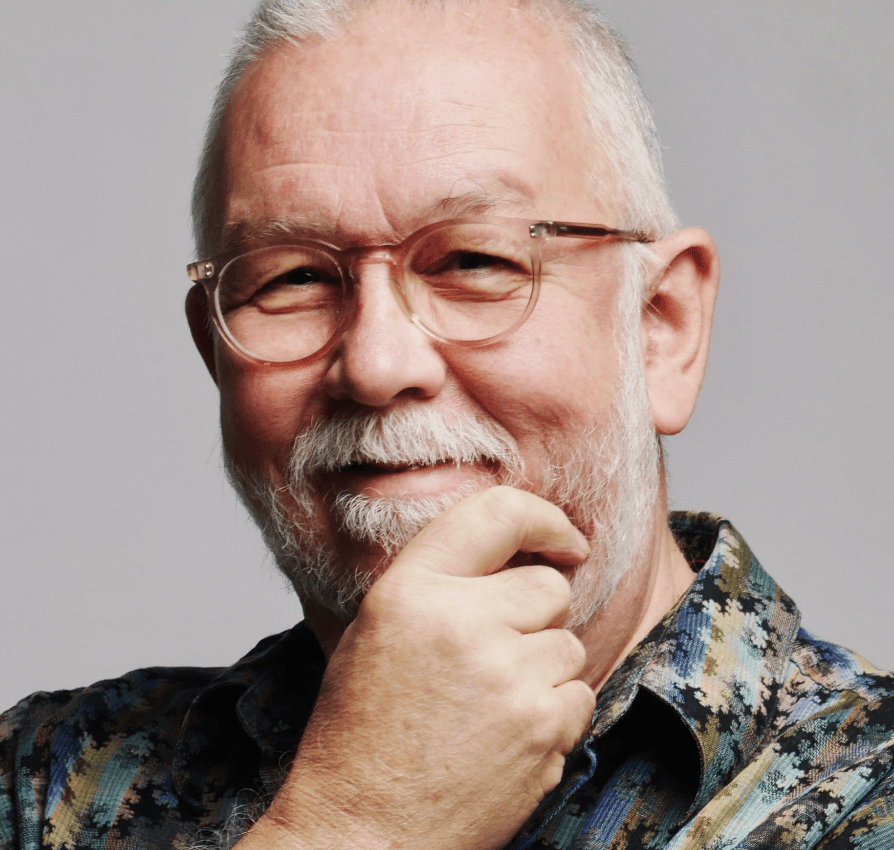
Peter Mitchell
© 2026 Between-Us Groups™. All Rights Reserved | Website Terms of Use | Privacy Policy